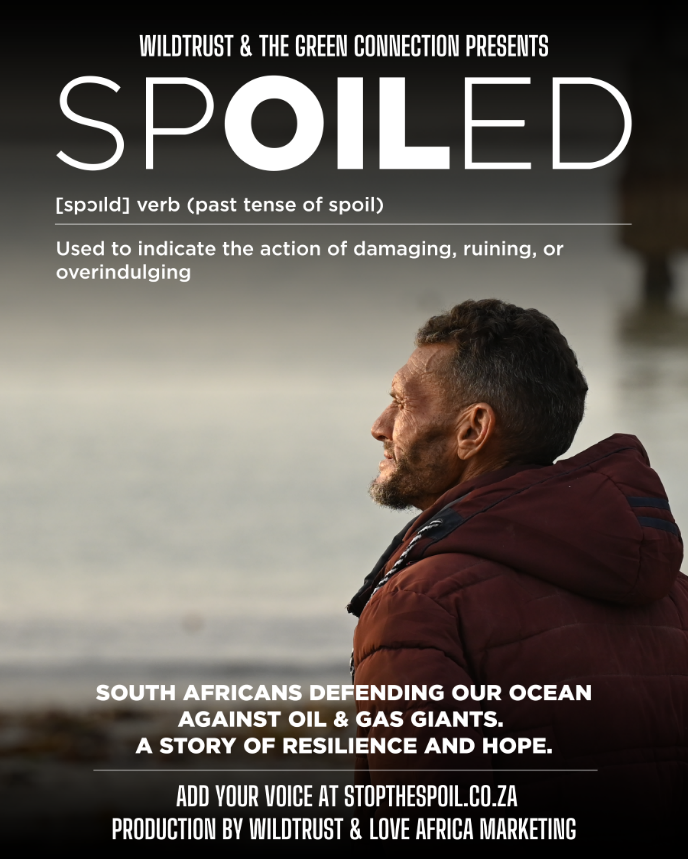
Before big environmental numbers turn into “crisis fatigue,” Lauren leads with heart and real human stories. She co-creates SPOILED alongside WILDTRUST, Green Connection, communicators, and filmmakers. Together, they stand with coastal communities facing offshore oil and gas plans across roughly 90% of South Africa’s ocean space.
SPOILED has already won the Terres de l’Ebre Award for Best Film Promoting Sustainability at the Terres Travel Festival in Spain. The film was selected from 157 entries from 29 countries and has had more than 2 million views across social media.
We sat down with Lauren to discuss why stories beat statistics and how families can find hope without feeling overwhelmed. She also explained why her 1,000-acre dream wouldn’t be land at all — it would be ocean.
1. The Story Behind SPOILED
SPOILED powerfully brings the experiences of South African coastal communities to the forefront. What pivotal moment or realization drove WILDTRUST to tell this story through documentary film? Why did it choose this format over traditional campaign methods?
There is nothing more powerful than an authentic, truthful story told from the heart. Having met and spent time with these extraordinary ocean warriors, we knew we had to amplify their voices. We also had to share their stories, not only with South Africa, but with the world. We wanted people to understand that they, too, have a role to play in helping these communities protect and conserve our precious ocean spaces. By doing so, they can safeguard the livelihoods of millions who depend on them.
The urgency of that message becomes even clearer when you consider the sheer scale of the threat. With 90% of the ocean around South Africa under lease for oil and gas exploration, extraction or production, the risks are impossible to ignore. A major oil spill or blowout would be an environmental disaster. Its consequences could ripple through coastal communities, marine ecosystems, and the economy. That is why educating and engaging people is so important: we need more people to understand what is at stake, what could be lost, and why protecting our ocean matters to us all.
Green Family Guide Note:SPOILED profiles everyday heroes from the Northern Cape to the Wild Coast fighting to protect South Africa’s oceans from offshore oil and gas.
2. Bridging Science and Emotion
You’ve noted that evidence builds credibility while emotion creates connection. How can everyday families and young people communicate climate and conservation issues to others? How can they do so without relying purely on alarming statistics?
I think the scale of the climate crisis and the social and environmental challenges we face can sometimes feel overwhelming. As a result, people can become paralyzed. Rather than knowing where to begin, people may find it easier to remain neutral and do nothing at all.
As a campaigner, I have come to realize that before you can inspire people to change, you first have to make them feel something. We are human. When an issue feels distant or disconnected from our own lives, it is easy to remain a passive observer in an increasingly chaotic and changing world.
But storytelling can change that. If, as we have tried to do with this film, you create a space for people to feel, empathize and connect with others’ experiences, a distant issue suddenly becomes personal. When people understand that even small choices and actions in daily life can help protect the ocean, support nature and safeguard people’s livelihoods, the challenge feels less paralyzing. Instead, people see that they have agency, that their choices matter, and that they can be part of the solution.
3. Giving Voice to Coastal Communities
The fishers, activists, and coastal community members featured in SPOILED are the true heart of the film. How does WILDTRUST ensure local communities actively shape and own their stories? This approach goes beyond simply featuring them.
A film like this is a collaboration and a process of co-creation from day one. I can still tell you the date, time and venue of our first gathering. We met in a room to think deeply about the messages around offshore oil and gas that needed to be brought to the fore. We brought together WILDTRUST and its conservation expertise, Green Connection and its focus on advocacy, awareness and human rights, alongside communications specialists and an experienced filmmaking team. Everyone brought their own knowledge, experience and, importantly, their feelings to the table.
Together, we laid the foundations for the film by working through the key messages, target audiences, and media channels. We also asked ourselves a more fundamental question: what did we want people to know and feel after watching it?
Ultimately, we wanted people to feel empowered. We wanted them to understand that they have a say, their voices can be heard, and they can play a meaningful role in protecting our ocean and the people who depend on it. Offshore oil and gas applications are relentless and ongoing. Successfully challenging them requires people to understand the legal and public participation processes available to them. When people have access to the right information, they are better equipped to engage, question and speak out.
That was at the heart of the film: helping people realize that they are not powerless. Every one of us can add our voice to the growing call to protect our ocean and nature. Our communities’ lives and livelihoods depend on them.
4. Overcoming “Crisis Fatigue”
Constant news about climate change and ocean degradation overwhelms many people. What is your top advice for maintaining hope and finding personal agency in conservation work?
My biggest piece of advice is to focus on what you can influence, rather than becoming paralyzed by the enormity of what you cannot control.
The climate crisis and the degradation of our ocean can feel overwhelming, particularly when we constantly hear stories about what we are losing. But I have learnt through conservation and campaigning that hope is not about pretending everything will be okay. Hope comes from action.
You don’t have to save the ocean on your own. Start with the choices you make, the conversations you have, the information you share, and the causes you choose to support. Add your voice to a campaign. Participate in a public process. Challenge something you believe is wrong. Support the people and communities already doing extraordinary work to protect nature.
I have been fortunate enough to meet people who fight every day to protect the ocean. Their livelihoods depend on it, and they remind me that individual actions can become powerful collective action when communities multiply them.
So rather than asking, “How can I possibly fix something this big?”, ask, “What is the one thing I can do today?”
That’s where I think hope lives: in recognising that you are not powerless, your choices matter, and your voice matters.
Try This At Home: Pick ONE action this week. Watch SPOILED together, download the SASSI app, or join a local beach clean-up. Small + done beats big + overwhelming. See our Top Tips – How to Walk Your Green Talk.
5. Protecting SA’s Coastline
Around 90% of South Africa’s ocean space faces offshore oil and gas exploration. The risks are immense. What simple, everyday actions can citizens and families take to support marine protection and back coastal communities?
Our website, stopthespoil.co.za, is still very much a work in progress, particularly because new offshore oil and gas applications are constantly emerging. But its purpose is simple: it gives people the information they need to understand what is happening in our ocean. Importantly, it also explains how they can have a say.
The platform aims to make public participation more accessible. It helps people identify current oil and gas applications and understand when and how they can get involved. They can attend public meetings, comment on Environmental Impact Assessments (EIAs), or participate in other consultation processes. Too often, these processes are difficult to navigate, poorly communicated and reduced to little more than a tick-box exercise. If people don’t know that an application exists, or understand their right to participate, how can we expect them to make their voices heard?
There are also opportunities for South Africans to advocate for greater protection of our ocean through the expansion of our network of Marine Protected Areas (MPAs). These spaces are incredibly important. Marine ecosystems can recover and thrive there, while MPAs provide vital breeding and feeding grounds for marine life. They also create benefits that extend beyond MPA boundaries. Moreover, MPAs can contribute to healthier, more resilient ocean ecosystems and coastal communities in the face of climate change.
But ocean conservation doesn’t only happen through legislation, campaigns or public participation. There are simple things every one of us can do, every day. Invest in a reusable water bottle and coffee cup. Take them with you. If you forget your cup, refuse the plastic lid. Choose reusable shopping bags, avoid unnecessary single-use plastics and look for alternatives to heavily plastic-wrapped products. Reuse, refuse, recycle and upcycle. Get creative, especially as we approach the festive season, by wrapping gifts in reused or upcycled paper. Look out for local beach clean-ups and get involved.
None of these actions, on their own, will solve the enormous challenges facing our ocean. But individual choices are not insignificant. They help shift habits, start conversations and build a culture where caring for the ocean becomes part of how we live. When people combine those actions with using their voices to participate, advocate and demand change, they become something much more powerful: collective action.
6. Turning Awareness into Action
What has been one of the most rewarding responses or actions you’ve seen from an audience member after watching SPOILED?
Honestly, the most memorable moment for me was watching the people featured in the film see it for the first time. They recognized the power of their own stories and perhaps realized for the first time how many people they could inspire. Those people could stand up and protect their ocean, their communities and their livelihoods. It was incredibly moving.
There is something quite daunting about being trusted to tell someone else’s deeply personal and very real story. It is an enormous responsibility, but also such a privilege and an honor. So, seeing their reaction was truly magical. We knew they felt we had told their stories authentically. Then we watched them begin to see themselves as the heroes we had always known they were.
7. Where You Find Peace
When you need to recharge away from campaign strategy and environmental advocacy, where is your favorite natural space in South Africa? Where do you re-connect and find inspiration?
I find so much of my inspiration in my daughters, who are five and ten. The work I do today can help protect, preserve and conserve the ocean they will one day inherit. That reminds me why I work after hours, sometimes sacrifice precious family time, and continue to use my voice, even when it isn’t always easy.
I feel incredibly privileged to be able to call this my “work”. Campaigns like these can take a lot out of you, both personally and emotionally. However, what I do can contribute, even in some small way, to leaving behind a healthier ocean and planet for my girls and future generations. That makes it absolutely worth it.
And then there is the place that restores me. In northern KwaZulu-Natal, within the iSimangaliso Wetland Park, there is a little piece of wilderness heaven called Bhanga Nek. I honestly don’t think I have ever been anywhere more beautiful or peaceful. Disconnecting from the noise of everyday life feels incredibly restorative. That includes having virtually no cellphone signal and simply being surrounded by nature.
Bhanga Nek is also home to critically endangered leatherback turtles. I have had the extraordinary privilege of witnessing mothers lay their eggs and tiny hatchlings make their way into the world. Those moments stay with you. They powerfully remind us how precious and vulnerable our natural world is, but also how resilient it can be when we give it the space and protection it needs.
So, when the realities of the world and the scale of the environmental challenges we face begin to feel heavy, I go to Bhanga Nek to recharge and reconnect. There, I remind myself what we are fighting for and who we are fighting for.
8. The 1,000-Acre Dream
If you were gifted 1,000 acres of land anywhere in Southern Africa to restore and protect, where would it be? What would your vision for that land look like?
Land or ocean? LOL! Because in my world, I would definitely choose ocean space.
If I could, I would claim 1,000 acres of the ocean that Chanel, Neville, Walter and Ezile have spent so many years tirelessly fighting to protect. They have fought to protect it from offshore oil and gas, and I would protect it on their behalf.
Getting to know them personally, hearing their stories, and understanding their struggles has had a profound impact on me. Those struggles are very real and, at times, life-threatening. They faced these challenges while standing up to industry. If I could take even a small part of that burden from them and permanently protect a piece of the ocean they have fought so hard for, I would do it in a heartbeat.
Through this journey, small-scale fishing communities have also carved out a very special place in my heart. Their voices are too often marginalized, despite their deep connection to and dependence on the ocean. They also compete for space and resources with much larger commercial interests. For many small-scale fishers, however, the ocean is not simply an economic resource. It is food, livelihood, culture, identity and community.
So my 1,000-acre dream would be about far more than drawing a protected boundary on a map. It would be a thriving piece of ocean where marine life could recover. Small-scale fishing communities would have a meaningful voice in how people cared for and managed it, and people and nature could coexist and benefit from one another.
Ultimately, I would want it to belong, in spirit, to the people who have spent years fighting for it. It should protect nature and the communities whose lives, livelihoods, and identities connect deeply to the ocean.
9. Daily Eco-Habits
What is one small, non-negotiable eco-habit or sustainable practice you maintain in your own household?
Only one?! As an activist I cannot simply share one – so, we recycle at home and only use reusable shopping bags, coffee cups, and water bottles. We refuse single-use plastics everywhere we go as a family, no matter how inconvenient. We also use the WWF SASSI APP to see if the seafood choices we make in the grocery store or in a restaurant are sustainable or not. We also only purchase free-range products.
Green Family Guide Note: The WWF-SASSI app uses a simple traffic-light system: Green means tuck in, Orange means think twice, and Red means avoid. It helps you identify sustainable seafood in real time while shopping or dining out.
10. Anthem for Change
If your journey in conservation communications had a theme song, what would it be?
I Was Here – Beyoncé.
Listen Together: Play it after watching SPOILED with your family. Lauren’s message is the same: leave the world better than you found it.
What Does This Mean For Your Family?
Your voice matters: You can comment on oil and gas applications and EIAs — you don’t need to be an expert.
Small choices add up: Reusables, sustainable seafood, and beach clean-ups build a culture of caring.
Hope is an action: Start with one thing you can do today, not everything you can’t control.
Watch Together:Watch SPOILED with your family on stopthespoil.co.za — then talk about what you felt, not just what you learned. That’s where change starts.
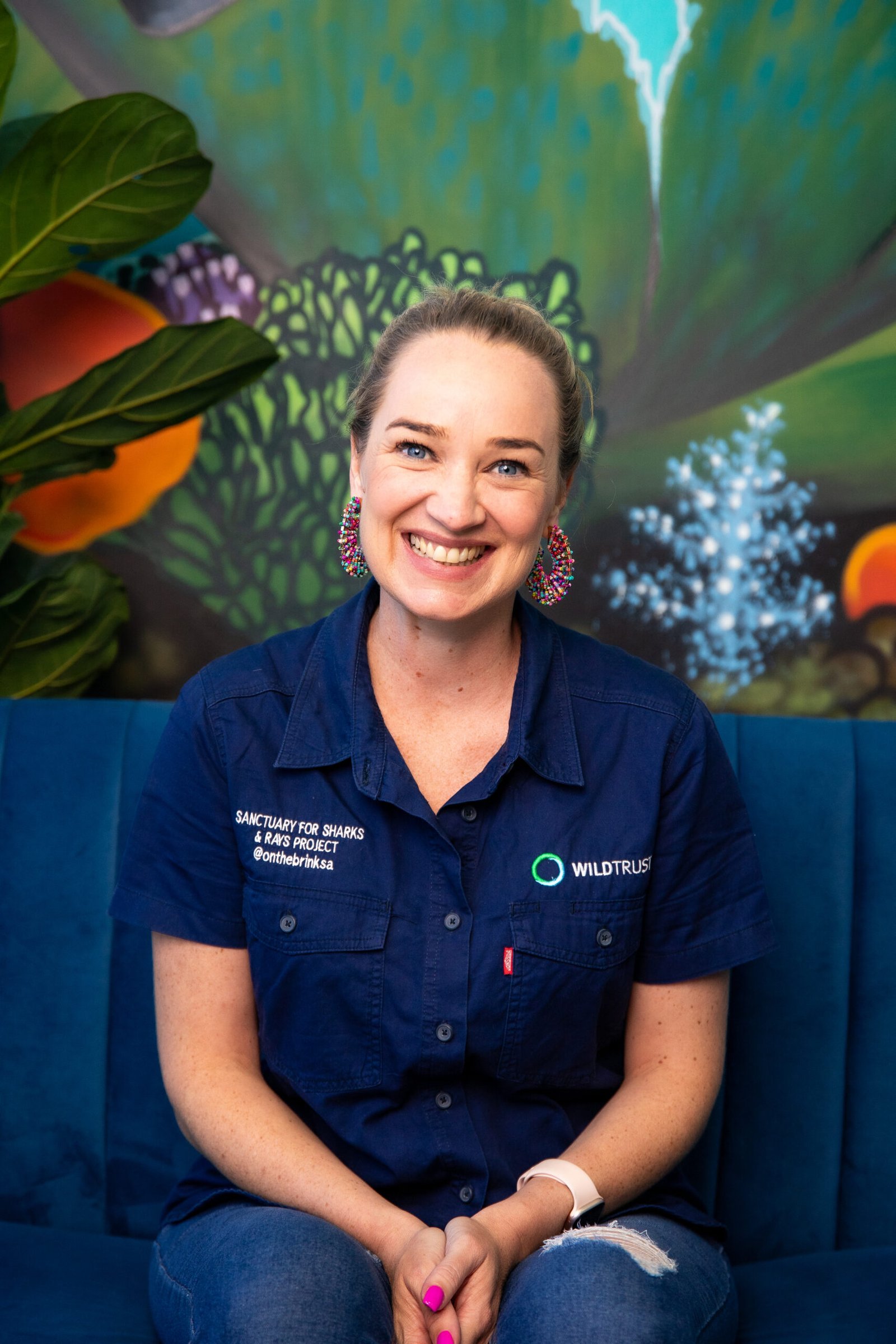
Photo Caption: Lauren van Nijkerk, Campaigns and Communications Director at WILDTRUST, and mum of two, co-creator of SPOILED.